

Cherry and violet, a turn of pepper, and freshness that carries through the finish: Areni Noir offers a compelling introduction to Armenian red wine. Its appeal lies in the way fragrance, fruit, and texture come together. The wine can feel generous without overwhelming the palate.
Areni Noir is an indigenous Armenian grape closely associated with Vayots Dzor, the mountainous wine region in southern Armenia. Usually called simply Areni in Armenian, it makes wines ranging from fresh reds and rosés to more structured, oak-matured expressions. Understanding those differences is the key to choosing a bottle.
What does Areni Noir taste like?
Areni reds often show cherry and other red-fruit aromas, sometimes with violet or peppery notes. Fine tannins and refreshing acidity can give them a graceful shape, while color and body vary with the wine. WSET’s overview of Armenian wine identifies this combination of fragrance, acidity, and fine tannin as characteristic of the variety. WSET: A guide to Armenian wines
The useful question is how those elements fit together. Does the fruit taste bright and just-picked, or riper and more concentrated? Do the tannins feel silky, firm, or drying? Does the finish stay lively after the fruit fades?
Those distinctions tell you more than a long list of aromas. A wine can be deeply flavored without being heavy, just as a relatively pale red can have considerable persistence.
For readers who enjoy fragrant, fresh styles of Pinot Noir, Areni is a rewarding grape to explore. Think of that as a suggestion based on taste preferences, rather than a promise that the wines will taste alike.
Vayots Dzor: the landscape behind the wine
To understand an Areni from Vayots Dzor, look beyond the grape name to the vineyard.
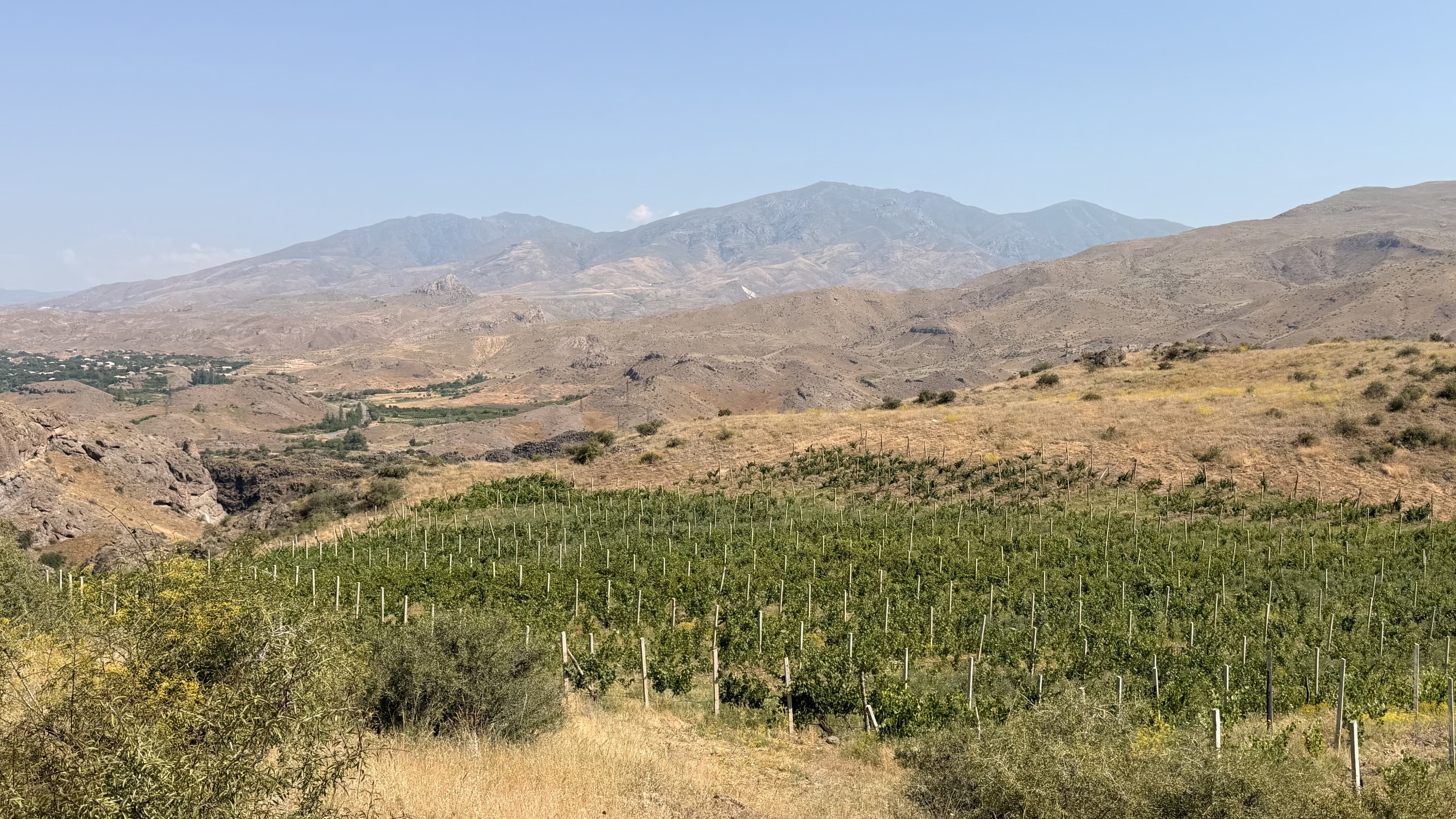
At Vayk Winery, our Arpa Valley vineyards rise approximately 1,350–1,550 metres above sea level, largely on northwest-facing slopes. Some parcels lie on ancient lava flows associated with Vayots Sar. Explore our vineyards
Elevation affects temperature, while the direction a slope faces changes its exposure to sunlight. Soil depth and drainage influence how water is available to the roots. Together with the season’s weather and vineyard management, these conditions affect how the grapes ripen.
For the grower, the practical question is when to pick. Sugar accumulation, acidity, flavor development, and the maturity of skins and seeds do not advance in perfect step. Harvesting requires judging their balance, rather than waiting for a single ideal number.
This is why “high altitude” is a starting point for understanding a wine, not a quality score. The interest lies in the particular site and the decisions made there.
Is Areni wine dry or sweet?
Areni is a grape variety, not a sweetness category. It can make both dry and semi-sweet wine. Ripe-fruit aromas do not necessarily mean a wine contains noticeable sugar, and a rosé’s color does not tell you whether it is dry.
Use the style description on the bottle or product page:
| Style | What to look for | When to choose it |
|---|---|---|
| Fresh dry red | Fruit, acidity, and a relatively direct expression of the wine | An introduction to the grape or a versatile dinner bottle |
| Oak-matured dry red | The relationship between fruit, tannin, and oak influence | When you want more texture or a wine for a substantial meal |
| Rosé | Freshness, fruit character, texture, and the stated sweetness level | Fish, vegetables, salads, and lighter dishes |
| Semi-sweet red | A balance between residual sweetness and acidity | When you prefer a softer, sweeter style |
“Reserve” deserves a closer look rather than an automatic assumption of quality. Read the producer’s description for the actual maturation details. Oak use, time in barrel, and the intended style are more informative than the word alone.
How winemaking changes the expression
Areni gives the winemaker choices about how much structure to draw from the fruit and how to develop it afterward.
During red-wine fermentation, contact with the skins contributes color and tannin. The way that contact is managed matters as much as its duration. More extraction can add substance, but the aim is a texture that suits the fruit.
Rosé generally involves more limited extraction, through pressing or a shorter period of skin contact. The result can range from delicate to surprisingly substantial. A light color does not require a thin palate.
Maturation then shapes the wine further. Oak can contribute aromatic notes and influence texture, but its effect depends on the barrel and the time involved. At Vayk Winery, Kars Red Dry spends six months in Armenian oak; that is a specification of this wine, not a formula for Areni as a whole. Kars Red Dry
When tasting, ask whether oak supports the wine’s fruit or dominates it. The same principle applies to extraction: the most satisfying bottle is the one whose elements work together.
What old vineyards tell us about Areni
Old vineyards preserve more than a picturesque landscape. They can hold valuable diversity within a grape variety.
In a 2021 study of Armenian grapevine material, researchers examined 27 samples identified as Sev Areni and reported substantial diversity within the variety. The paper describes material collected from vineyards in Vayots Dzor more than 200 years old. That describes the vineyards; it should not be read as a verified age for every sampled vine. Margaryan and colleagues: Armenian grapevine genetic diversity
The significance is practical. Identifying and conserving different vine material can inform future research and planting choices. A familiar grape name does not mean every vine beneath it is identical.
Vine age alone, however, cannot predict the quality of a bottle. The health of the vineyard, its crop, and the work of the grower remain essential. Genetic diversity is a resource to understand and preserve, not a tasting score.
Areni-1: ancient winemaking, carefully understood
Vayots Dzor’s wine history has unusually tangible evidence. At the Areni-1 cave complex, researchers documented a pressing installation, a vat, pottery, and grape remains associated with wine production around 4100–4000 BCE. Archaeological findings and chemical analysis support winemaking here more than 6,000 years ago. UCLA’s account of the Areni-1 discovery
That discovery establishes the antiquity of winemaking at the site. It does not establish that the grapes were the modern Areni variety. The shared name is not genetic evidence.
Keeping those histories distinct makes both more interesting: Areni-1 reveals an early wine-producing culture, while living vineyards allow researchers and growers to investigate the diversity of Armenian grapes today.
For the wine drinker, the archaeological story adds context. The reasons to open a bottle remain its character, balance, and pleasure at the table.
What to Pair with Areni Wine
Start with the style of wine, then consider how the food is cooked.
A fresh dry Areni is a useful choice for roasted mushrooms, tomato-based dishes, or grilled vegetables. Try it with khorovats—Armenian barbecue—especially when the meal includes charred eggplant, peppers, and tomatoes alongside the meat.
For a more structured, oak-matured red, consider lamb, slow-cooked meat, or aged cheese. The dish gives the wine’s texture something substantial to accompany. Very sweet glazes can change the balance, so consider the sauce as carefully as the main ingredient.
Areni rosé offers another route: grilled trout, herb-dressed salads, or soft cheese. Its appeal at the table depends on its acidity and texture as well as its fruit.
These are suggestions to explore, not fixed pairings. Before committing to a match, taste the wine with a bite of the finished dish.
Three ways to explore Areni at Vayk Winery
For a first bottle, choose the style that already appeals to you. For a closer look at the grape, compare two contrasting expressions.
Zakaré Red Dry: fruit and freshness
Zakaré Red Dry is our approachable, medium-bodied introduction to Areni Noir. Cherry and pomegranate notes meet lively acidity and fine tannins. Start here if you want a dry red for the dinner table and a clear introduction to the variety’s fruit character.
Kars Red Dry: oak and texture
Kars Red Dry develops the comparison through six months in Armenian oak. Red fruit is accompanied by spice and a silky texture. Taste it beside Zakaré and pay attention to the shape of the wine: the weight across the palate, the grip of the tannins, and what remains in the finish.
Kars Rosé: a different expression
Kars Rosé presents Areni through floral aromas, peach, and red berries, with a rounded palate. It is worth considering in its own right, particularly alongside fish or a vegetable-led meal.
This comparison is an exploration of three finished wines, rather than a controlled experiment: each has its own production decisions. Together, they show why the grape name is the beginning of the story, while the individual bottle deserves the final word.
To explore further, browse our Armenian wines or plan a vineyard, winery, and cellar visit with a tasting.