

White peach and quince, citrus blossom and beeswax: discover the flavors of Voskehat, its place in Vayots Dzor, and the pleasure of bringing Armenian white wine to the table.
Voskehat’s appeal begins with fruit, but its character often emerges in the finish. Pear and white peach may give way to citrus peel, a delicate herbal note, or a lightly waxy impression. In more substantial expressions, the wine fills the palate before a thread of acidity brings it back into focus.
That interplay of richness and freshness makes Voskehat worth getting to know. It can be an easy companion to grilled fish and fresh herbs, yet offer enough depth to hold your attention through a longer meal.
Voskehat is an indigenous Armenian white grape variety, grown in several of the country’s wine regions, including Vayots Dzor. Its name means “golden berry.” For anyone exploring Armenian white wine, it opens a particularly interesting door: one grape, interpreted through different vineyards and winemaking choices, with considerable variety in the glass.
What Does Voskehat Wine Taste Like?
Voskehat’s flavors often gather around orchard and stone fruit: pear, apple, quince, peach, and apricot. Citrus can bring a sharper accent, while white flowers add delicacy. Depending on the wine, you may also encounter beeswax, gentle spice, or a savory, lightly saline impression.
These notes vary in emphasis. A youthful dry expression may lean toward citrus and fresh pear. A fuller wine may suggest riper peach or apricot, with a broader texture. Maturation and skin-contact techniques can introduce further complexity, including nutty notes and a firmer finish.
The most revealing quality is how those flavors unfold. Does the fruit remain clear as the wine moves across the palate? Does its richness carry through, or give way to a more delicate finish? A satisfying Voskehat holds those elements together, leaving flavor after the sip without becoming tiring to drink.
WSET’s overview of Armenian wine identifies stone fruit, pear, and floral notes among the variety’s characteristics, while recognizing its range from fresh whites to skin-contact styles. Read the WSET overview.
The White-Wine Side of Vayots Dzor
Vayots Dzor is closely associated with Areni Noir, but its white wines offer another reason to explore this mountainous region of southern Armenia.
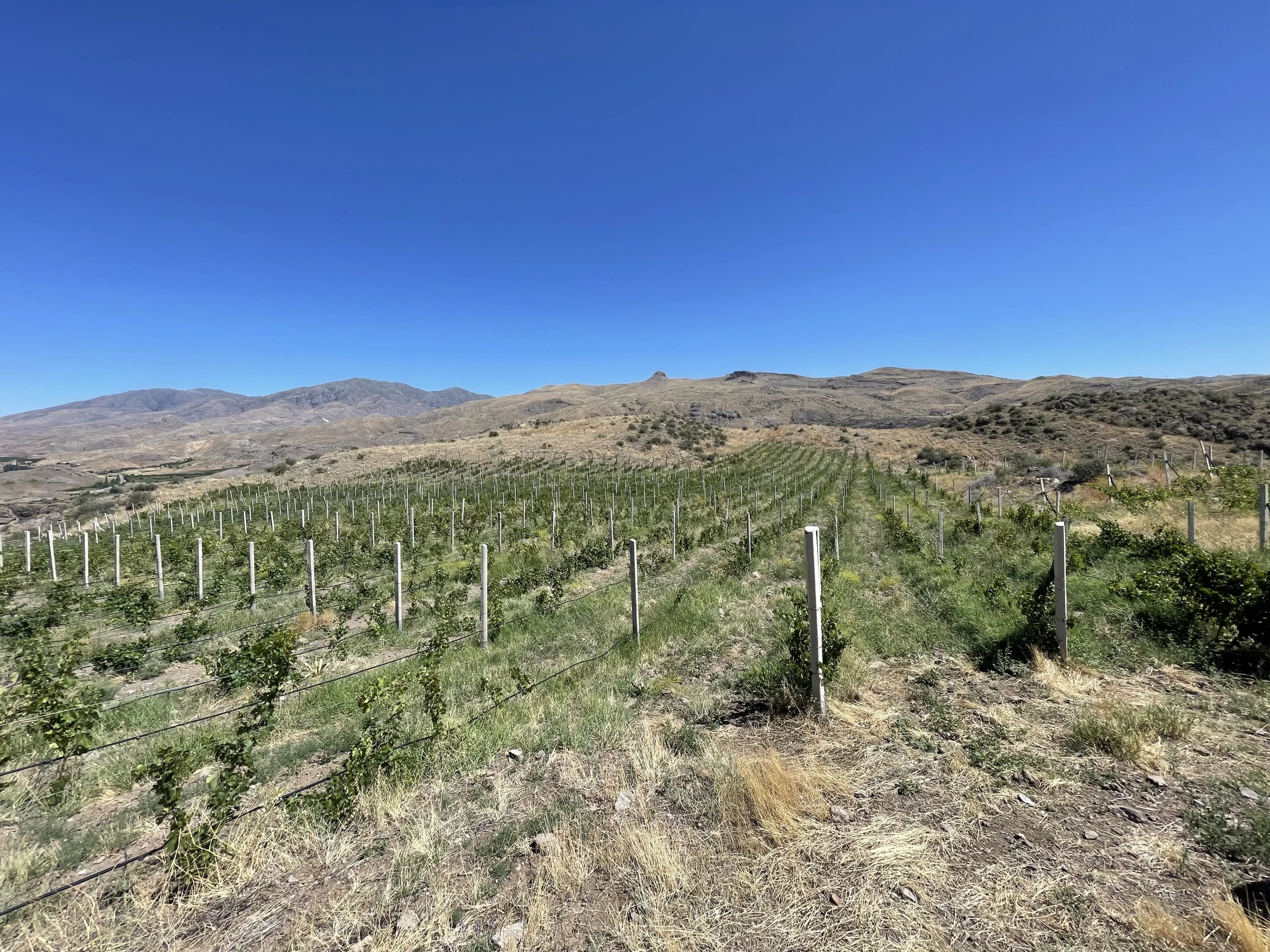
At Vayk Winery, our vineyards lie in the Arpa Valley at approximately 1,350–1,550 metres above sea level, or 4,430–5,085 feet. Northwest-facing slopes form part of the setting in which our Voskehat grows.
Elevation, exposure, and the season’s weather influence how the grapes develop. Warmth encourages ripening; cooler conditions help moderate its pace. Across a vineyard, differences in sunlight and water availability can affect when the fruit is ready.
Voskehat demands particular attention as harvest approaches. It is a late-ripening variety capable of accumulating sugar quickly, making the relationship between ripeness and acidity especially important. The picking decision must account for flavor as well as laboratory measurements.
For a white wine, that judgment shapes much of what follows: the ripeness of its fruit, its body, and the freshness that carries the finish.
Our vineyard story follows this work back to the Arpa Valley. In the glass, the result is expressed through the individual wine—its balance, texture, and depth.
Why Voskehat Can Feel Both Rich and Fresh
Texture is central to Voskehat’s appeal. Even when its aromas are delicate, the wine can have a rounded, almost tactile presence across the palate.
That sensation is separate from sweetness. A dry white can feel generous and supple, just as a semi-sweet wine can retain a lively finish. Ripeness and winemaking both influence the result.
Fermentation and maturation give the producer several ways to shape the wine. Stainless steel contributes no oak flavor. Barrel use can introduce spice and change the wine’s development, while extended contact with grape skins can add texture and tannic grip.
Those choices help explain the variety’s range. They also make the individual bottle more informative than a general description of the grape. A fuller Voskehat is not necessarily oak-aged, and the presence of honeyed aromas does not mean the wine is sweet.
For the drinker, the pleasure lies in finding the expression that suits the occasion: a fresh white for a light lunch, a more textured bottle for dinner, or gentle sweetness alongside cheese and fruit.
Is Voskehat Dry or Semi-Sweet?
Voskehat produces both styles. The label or product description will tell you which one you are choosing.
Dry Voskehat is a versatile starting point for the dinner table. Its fruit can be ripe and expressive while the wine itself remains dry.
Semi-sweet Voskehat retains more sweetness, giving the fruit a softer, rounder presentation. Acidity remains important, helping the wine finish cleanly.
Aromas alone cannot settle the question. Apricot, ripe pear, and honeyed notes may suggest sweetness before the first sip, but they are not measurements of residual sugar.
At Vayk Winery, our range includes two dry Voskehat wines and one semi-sweet expression, allowing you to explore both styles.
What to Pair with Voskehat Wine
Voskehat is especially rewarding with food that leaves room for its fruit and texture. Fish, herbs, soft cheeses, and poultry offer plenty of possibilities, with the preparation guiding the choice of wine.
Grilled Trout and Fresh Herbs
Grilled trout with dill or tarragon is a natural place to begin. The fish gives a dry Voskehat something substantial to accompany, while the herbs complement its floral and citrus notes.
Serve it with lavash, cucumber, and a little soft cheese for a relaxed Armenian table. A modest squeeze of lemon can bring the dish together without overwhelming the wine.
Roast Chicken and Mushrooms
A more textured dry Voskehat works well with roast chicken, particularly alongside browned skin and savory pan juices. Mushrooms, roasted vegetables, or a cheese-filled pastry provide other good matches.
For fish in a light cream sauce, choose a wine with enough body to remain present through the richness of the dish. Here, texture matters as much as freshness.
Soft Cheese, Pear, and Gentle Sweetness
Semi-sweet Voskehat is an inviting partner for soft cheese and ripe pear. It can also accompany lightly spiced dishes when a little sweetness is welcome.
With dessert, restraint helps. A delicate fruit pastry is more likely to complement the wine than a heavily sweetened cake, which can make it seem sharper and less fruity.
Three Ways to Discover Voskehat at Vayk Winery
Our three white wines offer different expressions of the same grape. Choose one for the meal you have in mind, or compare the two dry wines before moving to the semi-sweet.
Zakaré White Dry: Fruit, Citrus, and a Light Texture
Zakaré White Dry brings together white flowers, pear, apricot, and golden apple, with lemon peel and a subtle beeswax note.
Its lightly textured palate and refreshing finish make it a useful introduction to Voskehat. Pour it with grilled trout, shellfish, an herb-led salad, or soft sheep’s cheese.
Kars White: A Fuller Expression
Kars White has a medium-bodied palate, with jasmine and chamomile accompanying apricot, pear, and white peach. A delicate saline impression adds definition to the finish.
Choose it when you want more texture in a dry white. Beside Zakaré White Dry, it makes an interesting comparison: the same grape expressed through differences in body, floral character, and the way the flavor lingers.
Zakaré White Semi-Sweet: Rounded Fruit and a Fresh Finish
Zakaré White Semi-Sweet combines ripe pear, apricot, and citrus blossom with gentle sweetness and a delicate honeyed note.
Refreshing acidity balances its rounded palate. It is an appealing choice with soft cheese, fresh fruit, or lightly spiced food—and for anyone who simply prefers a sweeter white.
Serving Voskehat
We recommend serving these three wines at 12°C / 54°F.
If the bottle has been thoroughly chilled, allow the poured wine a few minutes in the glass. Excessive cold can suppress the aromas and make the texture harder to appreciate. As it warms slightly, the fruit and floral notes may become clearer.
For a comparison tasting, use similar glasses and temperatures. Begin with Zakaré White Dry, move to Kars White, and finish with Zakaré White Semi-Sweet.
Discover the Wine—and the Place Behind It
Voskehat brings another dimension to the experience of Armenian wine: the breadth of its white varieties, their possibilities at the table, and the work taking place in mountain vineyards today.
A first bottle can lead naturally to a second expression, a different food pairing, or a closer look at Vayots Dzor.
Explore our wines, or plan a visit to Vayk Winery for a tour and tasting. If Voskehat is your particular interest, mention it when booking and ask which wines will be available.
The introduction can be as simple as grilled trout, a few fresh herbs, and a glass of Armenian white wine with time to open.