

Deep color, expressive fruit, and a firm texture are part of Khndogni’s appeal. This red grape offers another way to explore Armenian wine, particularly for drinkers who enjoy a wine with enough presence to accompany a generous meal.
Khndogni (Խնդողնի), also spelled Khndoghni and known as Sireni, is a red-wine grape closely associated with Artsakh (Nagorno-Karabakh) and southern Armenian viticulture. Its character takes shape through the vineyard, the season, and the choices made in the cellar.
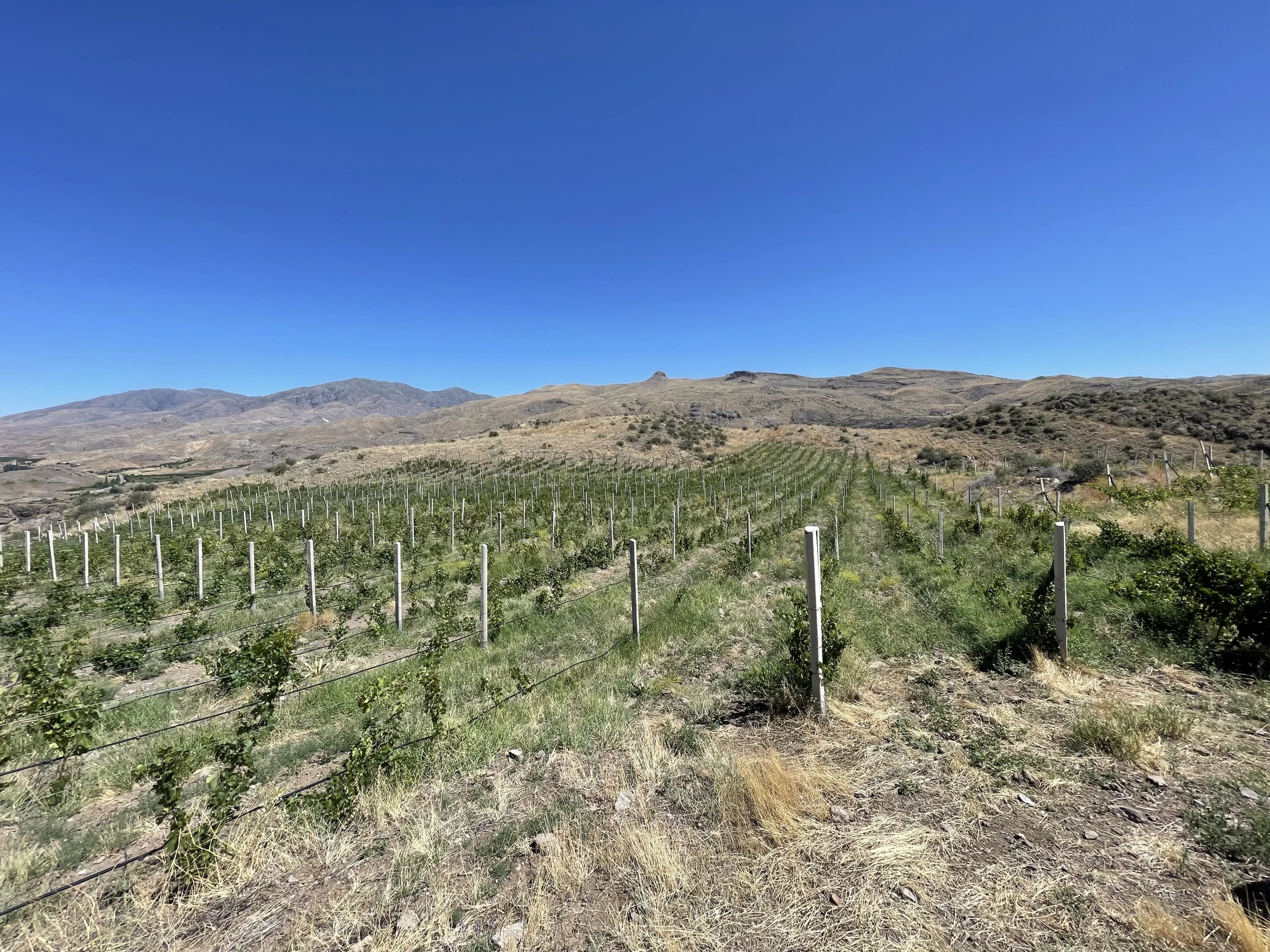
At Vayk Winery, our connection began with vine cuttings brought from Artsakh in spring 2023. Today, they form a small planting in Vayots Dzor—a vineyard story we plan to develop further.
What Does Khndogni Wine Taste Like?
Khndogni is described in grape profiles as capable of producing deeply colored, full-bodied reds with noticeable tannins. Fruit descriptions include cherry, pomegranate, and the tart red-fruit character of dogwood.
These are useful starting points for tasting, rather than flavors that must appear in every bottle. Ripeness, blending, extraction, and maturation can all change the expression.
Texture deserves as much attention as aroma. Tannins create a drying or gripping sensation; acidity brings freshness and makes the mouth water. In a satisfying red wine, those sensations work alongside the fruit instead of obscuring it.
Try following a sip from beginning to finish. Does the fruit remain clear? Does the texture feel supple or firm? Does the wine leave you ready for another bite of food?
Research has examined the pigments and other phenolic compounds in dry wines made from Khndogni. These are important areas of wine chemistry, but they do not amount to a universal tasting note. The individual wine still deserves to be judged in the glass.
Research on phenolic compounds in Khndoghni wines
Khndogni in the Vineyard
Khndogni’s history is closely connected with Artsakh and the grape-growing areas of southern Armenia. Its cultural association with those places is better established than its exact botanical birthplace.
An Armenian National Agrarian University description records compact bunches, medium-sized dark berries, and rounded leaves with five deeply divided lobes. It describes the variety as late-ripening, although published accounts differ on ripening classification.
For a grower, the practical concern is how the fruit develops in a particular vineyard. Sunlight, temperature, water availability, and crop management influence the pace of ripening and the condition of the grapes at harvest.
At Vayk, our Khndogni planting is part of our estate in Vayots Dzor. Understanding how this material responds to its surroundings is an important part of our plans for the grape.
The place where a cutting comes from gives it a history. The place where it grows next adds another chapter through each season’s conditions and the work of the people tending it.
Is Khndogni Wine Dry or Sweet?
Khndogni is a grape variety, not a sweetness category. It can be made into dry red wine, while Armenian agricultural literature also records its use for dessert-wine production.
A ripe cherry aroma or generous fruit character does not necessarily mean the finished wine is sweet. Sweetness depends on the wine’s residual sugar and how it is made.
For a dinner bottle, check the style description first. Then consider body, tannin, and any oak influence. Those details are more helpful than assuming every wine from the grape will behave the same way at the table.
How Winemaking Shapes Khndogni
Red-wine making gives producers several ways to develop color, flavor, and texture.
Contact with grape skins during fermentation helps extract color and tannin. The intensity of that contact, along with temperature and timing, influences the result. Greater extraction is not automatically better; the aim is a structure that suits the fruit.
Maturation introduces further choices. Stainless steel adds no oak flavor. Barrels can contribute aromatic notes and influence the wine’s development, with the effect depending on the wood, the barrel’s age, and the time involved. Armenian clay vessels, known as karas, offer another possible approach to fermentation or maturation.
These are winemaking options, rather than a fixed recipe for Khndogni or a description of a current Vayk bottling.
Blending provides another opportunity. A winemaker may assess how Khndogni’s color, fruit, and texture work with another variety, or explore the grape on its own. The useful question is what each choice brings to the finished wine.
What Research Tells Us About the Grape
Accurate grape identification matters when growers exchange cuttings and establish new plantings.
Khndogni illustrates why names alone can be misleading. Older sources sometimes treated Sveni as a synonym, but a 2021 study of Armenian grapevine material distinguished Sveni and Khndoghni using genetic and morphological evidence.
Margaryan and colleagues: Armenian grapevine genetic diversity
For growers, this work helps clarify the identity of planting material. For wine lovers, it offers a reminder that preserving grape heritage involves both the knowledge of farming communities and careful scientific study.
Research can help us understand the vine. Experience in the vineyard and cellar shows what can be made from it.
What to Pair With Khndogni Wine
Begin with the weight and texture of the particular wine, then consider how the food is cooked.
Khorovats and Grilled Lamb
For a substantial dry red, lamb khorovats is an inviting starting point. The richness of the meat and its browned edges give a firm wine something flavorful to accompany.
Grilled eggplant, peppers, and onions can bring the meal together. Taste the wine with the food before deciding whether its tannins feel too assertive on their own.
Slow-Cooked Beef and Savory Dishes
A fuller red can work well with slow-cooked beef and savory cooking juices. Roasted meat and a modest portion of mature cheese offer other possibilities.
Pay attention to the sauce as well as the main ingredient. A very sweet glaze can alter the balance of a dry wine, so simpler, savory preparations are a useful place to begin.
Mushrooms, Eggplant, and Lentils
Vegetarian dishes can provide plenty of depth. Try deeply browned mushrooms, roasted eggplant, or lentils with caramelized onions and olive oil.
For a more delicate wine, lighten the preparation. The aim is to leave room for its fruit rather than overwhelm it with richness or seasoning.
Our Khndogni Vines: From Spitakashen to Vayots Dzor
In spring 2023, vine cuttings were brought to Vayk Winery from growers in Spitakashen, in the Martuni region of Artsakh. They became the foundation of our Khndogni planting in Vayots Dzor.
Today, Vayk Winery cares for approximately 200 Khndogni vines in Vayots Dzor. They provide a living connection to the vineyards and people from which the planting material came.
Following the displacement of Artsakh’s Armenian community later that year, that connection holds particular meaning for us. The vines are part of our everyday vineyard work, but they also carry a story of shared knowledge and continuity.
We plan to expand the planting and explore small-batch wines, blends, and experimental lots. This will give us opportunities to learn how the grape develops under our own growing conditions and which winemaking approaches best suit the fruit.
Those wines are part of our future plans. We do not currently offer a separate Khndogni bottling.
For now, the work begins with the vines: caring for them, observing their development, and building the experience that will guide future decisions.
Serving Khndogni Wine
For a structured dry red, we suggest starting at 16–18°C / 60–65°F, slightly cool rather than warm.
Use a roomy red-wine glass and leave space above the pour. Taste soon after opening, then return to the wine as it develops. If it feels closed or especially firm, some air may help; there is no single decanting time that suits every bottle.
If you are considering cellaring, ask for advice about the particular wine and vintage. Tannin and deep color alone do not guarantee that a bottle will improve with long aging.
Discover More of Armenian Wine
Khndogni adds another story to the diversity of Armenian grapes: one shaped by its historic vineyards, the people who cultivated it, and the places where it continues to grow.
To explore further, read our guides to Areni Noir and Voskehat, browse our current wines, or plan a visit to Vayk Winery for a vineyard, winery, and cellar tour with a tasting.
If a particular grape interests you, mention it when booking and ask which wines will be available.