

Vayk Winery Journal · Vayots Dzor and wine heritage
Vayots Dzor and the Making of Armenian Wine
From the ancient press at Areni to the vineyards and cellar of Vayk Winery
In Armenia’s Vayots Dzor province, a cave preserves evidence of winemaking around 4000 BC. Outside, growers work with steep ground, abundant sunlight, cool nights and water that must be brought to the vines. Follow that water from the ancient press at Areni to the slopes where our founder, Ashot Zakaryan, saw surviving vines and began imagining a new vineyard.
A shoe beneath a broken pot
In 2008, archaeologist Diana Zardaryan uncovered a leather shoe beneath a broken vessel in Areni-1 cave. Its lacing survived. Grass still filled the inside. The leather had taken the shape of someone’s right foot.
The shoe looked almost too well preserved to be ancient. Excavators initially considered a medieval date, as Ron Pinhasi later recalled in an interview about the discovery. Samples sent for radiocarbon testing placed it around 3600–3400 BC. The published study describes an object cut from a single piece of leather, folded and laced into something immediately recognizable.
Someone had needed a shoe. Across the distance of thousands of years, that small fact is easy to grasp.
The cave also preserves evidence of wine production dating centuries earlier than the shoe. A pressing surface, a collecting vessel and the remains of grapes survived together. Here was a task that a modern winemaker could follow with an eye and a hand.
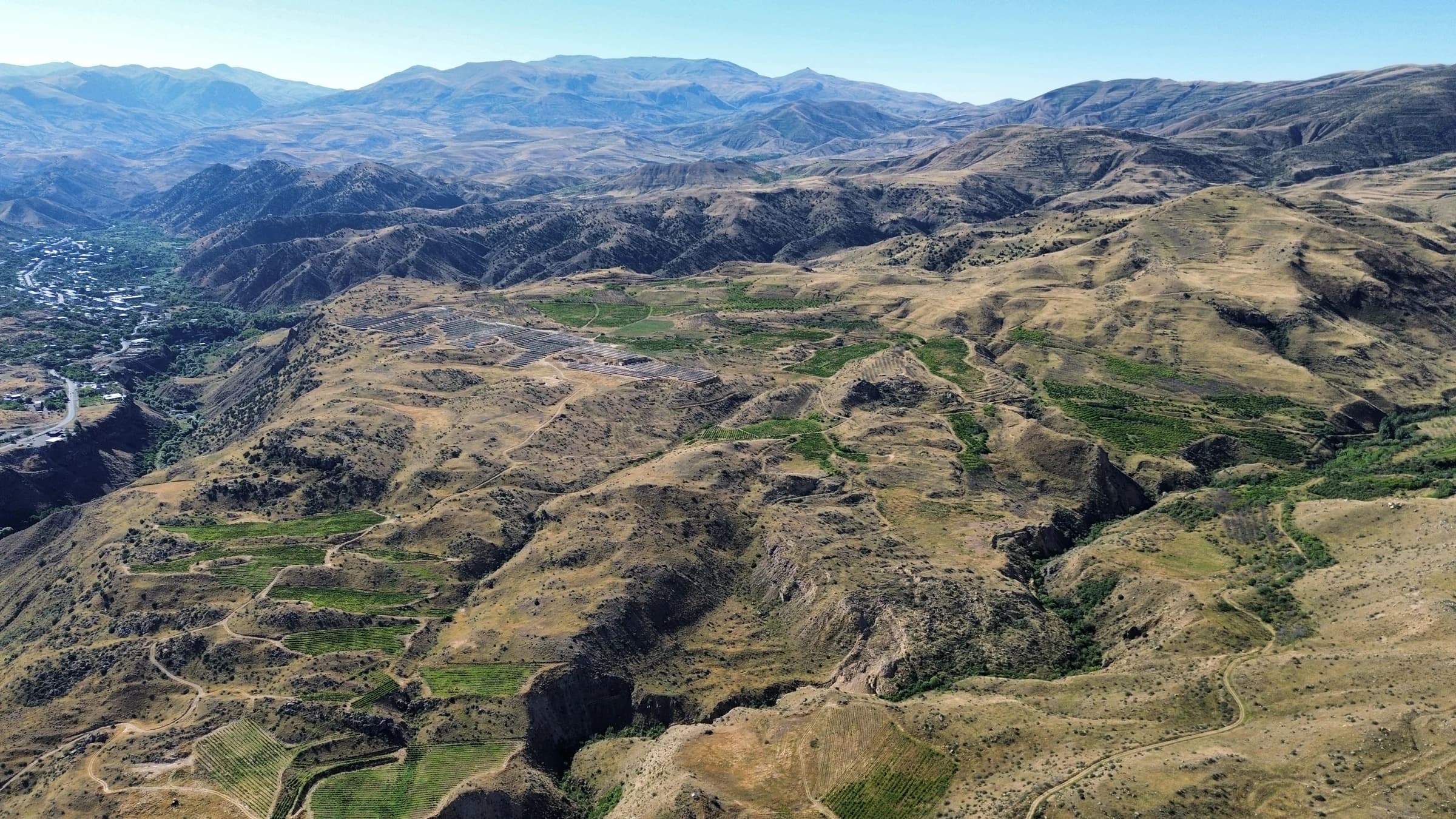
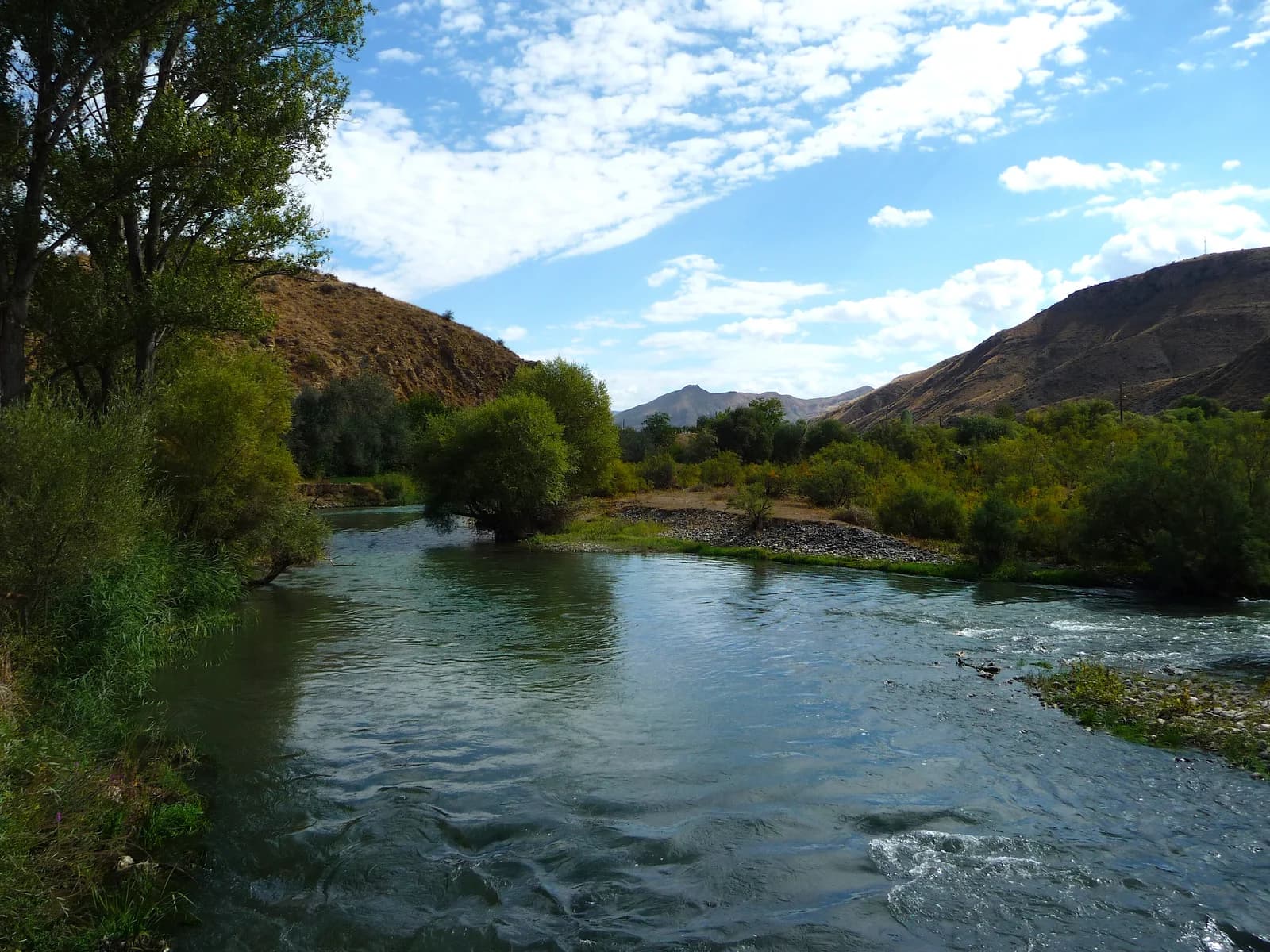
Areni lies in Vayots Dzor, a mountainous province in southern Armenia. Armenia itself is in the South Caucasus, between the Black Sea and the Caspian. In this part of the country, the Arpa River and its tributaries run through gorges and cultivated valleys, gathering the water on which vineyards depend.
The cave is one way into the region’s wine story. To understand the vineyards growing here today, it helps to step outside.


Where the juice ran
Look at the arrangement of the Areni-1 installation and its working logic becomes clear. A shallow clay platform slopes toward a large vessel set below it. Grapes could be pressed on the platform; juice could run down into the container. Gravity did the carrying.
Archaeologists found grape seeds, pressed grape remains and dried vine material around the installation. Chemical analysis of pottery added evidence of malvidin, a pigment found in red grapes and some other fruits. The pigment alone does not prove that a vessel held wine. Together, the features, grape remains and residues support wine production around 4000 BC, as Hans Barnard and his colleagues explain in their study of the chemical evidence.
The excavation brought together Armenian and international researchers, including Boris Gasparyan and Gregory Areshian. In UCLA’s 2011 announcement, Areshian described the discovery’s significance: “For the first time, we have a complete archaeological picture of wine production dating back 6,100 years.”
Areni-1 is often described as the world’s oldest known winery. The distinction is between a preserved production installation and evidence of wine itself: researchers have identified older grape-wine residues in pottery from present-day Georgia, dated to approximately 6000–5800 BC. The Georgian discoveries and Areni illuminate different parts of the South Caucasus’s early wine history.
The cave also held stored food and human burials. The excavators’ wider account explores connections between production, storage and ritual. Wine may have played a part in ceremonies associated with the dead; the details of those ceremonies remain unknown.
The water beyond the cave
The collision between the Arabian and Eurasian plates helped shape Armenia’s mountain landscape. Faulting, volcanic activity and erosion have also left their marks. Armenian geologists describe this varied terrain in a conference abstract on the region’s geological heritage.
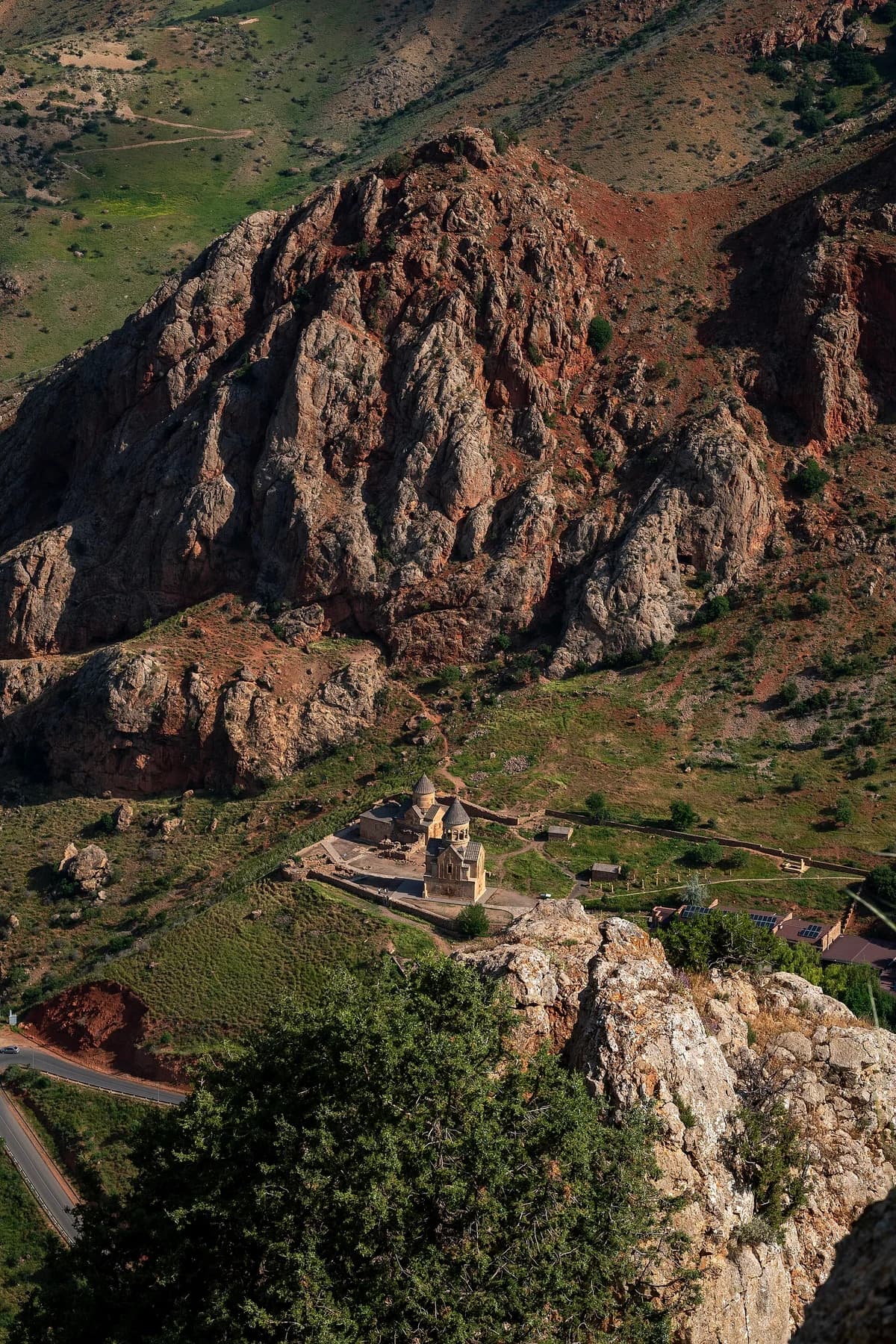
The rock changes from valley to valley. Around Noravank, the monastery stands among red and gray limestone cliffs, described in Armenia’s UNESCO Tentative List submission. Near the city of Vayk, lava associated with the Vayots Sar volcanic field once dammed the Arpa, according to the Smithsonian’s Global Volcanism Program.

Areni-1 is a limestone cave. Water can gradually enlarge cracks in limestone into passages, a process explained in the U.S. Geological Survey’s account of how caves form. At Areni-1, unusually dry conditions preserved leather and plant material that would have decayed elsewhere, as the shoe study describes.
Outside the cave, water has a more seasonal urgency. A slope that drains well after rain can become demanding ground in summer, and roots find different amounts of moisture as soil depth changes. That is why “mountain wine” is a practical description: the work changes from parcel to parcel, and before any harvest someone has to understand how the land holds water and bring enough of it to the vines.
Ashot’s first vineyards
Our founder, Ashot Zakaryan, grew up in the city of Vayk, exploring both sides of the Arpa. His father grew grapes beside the family home, and Ashot helped make wine from childhood. In an interview on October 18, 2026, he recalled how that familiar household practice gradually became a plan for vineyards of his own.
Around 1989–1990, after establishing a business on the river’s right bank, Ashot began looking more closely at land across the water. Near Zedea, on the left bank, old vines bore small black and white grapes beside what appeared to be an irrigation channel. Beyond the small watered patch, the slopes were dry and unused. “Seeing vines still growing there encouraged me to consider whether the adjoining land could support a vineyard,” he recalls.
Ashot was a mechanical engineer with construction experience, so he sought advice about the vines. He recalls bringing Stepan Stepanyan, a viticulture specialist from Merdzavan, to inspect the land. Stepanyan encouraged the project and helped him plan the vineyard. For planting material, Ashot selected Areni vines in Areni and Aghavnadzor, then learned from Stepanyan how to propagate them from woody cuttings.
Preparing the land meant assembling small plots from different owners, making access possible and working rough slopes with machinery from Ashot’s construction business. The existing watered patch offered a clue to the site’s promise; cultivating the surrounding land required a larger irrigation system. “I designed and installed irrigation with pumps and pipes, drawing on my engineering and construction experience,” he says.
We planted our first vineyards in 1996, beginning with Areni. The winery was completed in 2000, and our first full vintage followed in 2001, as we recount in our family history. Behind those dates were the tasks Ashot remembers: finding planting material, preparing the ground and getting water to the roots.
Working the land also raised questions about its earlier use. Ashot recalls an excavator uncovering a large clay vessel containing what appeared to be grape seeds, with other stone and clay features nearby. He wonders whether they belonged to an earlier winemaking installation and says he has asked Armenian heritage authorities to examine them. Their age and original purpose remain unconfirmed.
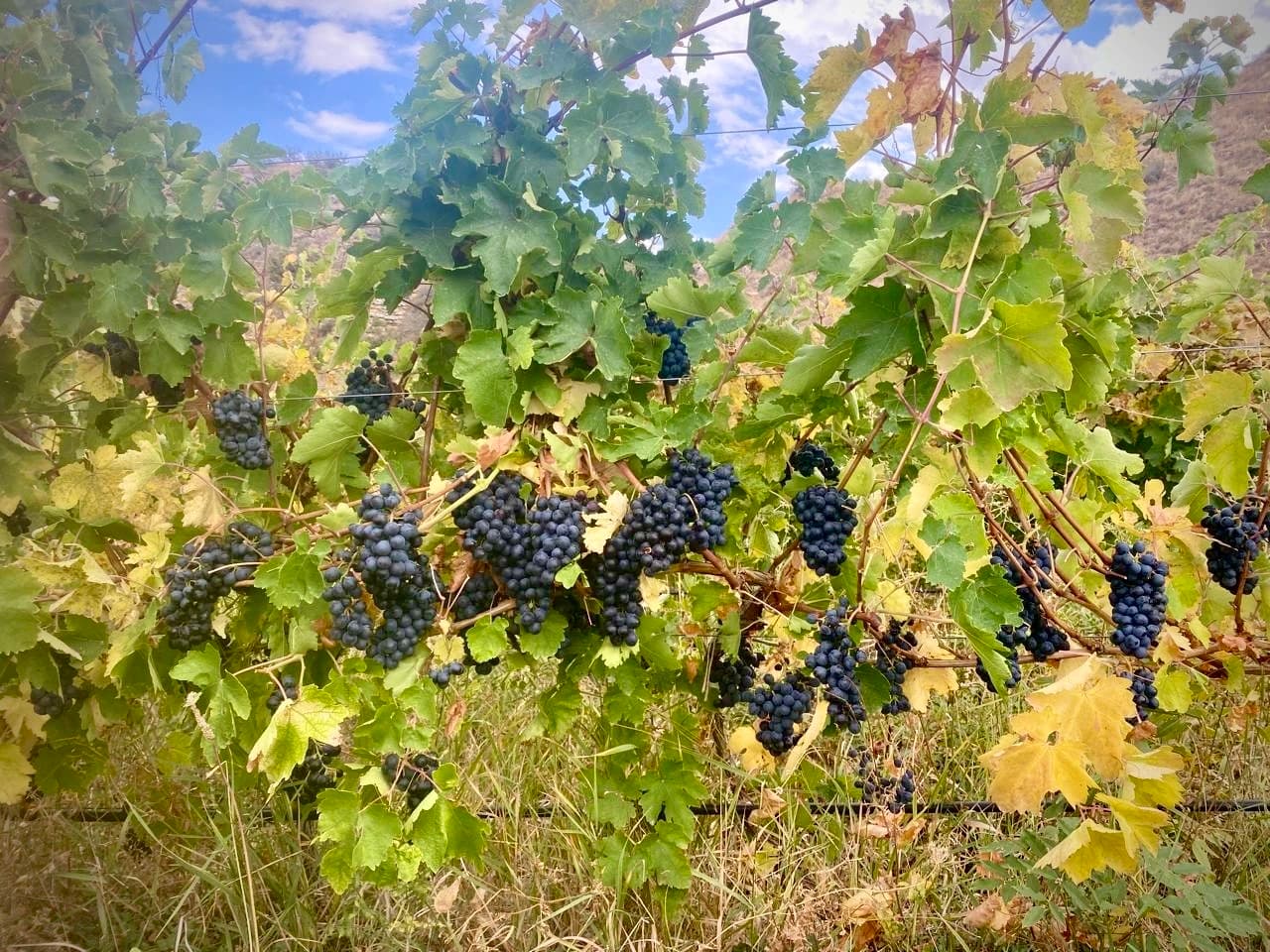
Today, we work with approximately 44 hectares of producing vineyards at elevations of roughly 1,350–1,550 meters. Areni Noir and Voskehat are central to our plantings, which lie largely on northwest-facing slopes. Our parcels span both banks of the Arpa, and the winery itself stands directly on lava-flow remnants associated with Vayots Sar, on the right bank.
Two grapes to begin with
For many visitors, Areni Noir is the first Armenian grape they encounter. In Armenia it is commonly called Areni. Its wines often suggest cherry, violet and pepper, with acidity that brings freshness to the glass. Voskehat, whose name means “golden berry,” offers a white-wine introduction through pear, stone fruit and floral aromas. These broad characteristics appear in the Wine & Spirit Education Trust’s guide to Armenian wine.
The two varieties also give a reason to pay attention to texture. With Areni, notice the gentle grip of tannin against the fruit. With Voskehat, notice how the wine fills the mouth and how acidity carries the finish. Those sensations can be easier to recognize than a long list of aromas.
Our guides to Areni Noir and Voskehat explore their different styles, from fresh wines for the table to fuller expressions shaped by maturation.
The vines themselves hold further variety. In a study of Armenian grapevine diversity, Kristine Margaryan and colleagues documented differences among Areni selections collected in Vayots Dzor. Some carried loose bunches; others were more compact. Genetic work helped distinguish relationships that names and appearances alone could obscure.
For growers, conserving those differences keeps planting choices open. For wine drinkers, it adds depth to a familiar name. Even within a recognized variety, the selections that growers preserve and propagate can differ in ways worth studying.
The archaeological studies cited here do not establish that the grapes used in the prehistoric cave were the same variety as today’s Areni. The connection we can make confidently is to the region’s long history of working with grapes, and to the continuing study of its vines.
The decisions inside a harvest
Harvest begins before the first bunch is cut. We follow the fruit as sugar accumulates and acidity changes, tasting alongside laboratory measurements. Picking fixes a moment in that process. Waiting can allow the fruit to develop further; a change in the weather can also bring the decision forward.
Elevation is part of this calculation. Warm days and cooler nights help shape ripening in Armenia’s highland vineyards, as WSET’s guide explains. The effect varies with the season and the site, which is why altitude on a label tells only part of the story.
We harvest and sort our grapes by hand before fermentation in temperature-controlled stainless steel. From there, our choices depend on the wine. We mature fresh whites in steel to preserve their fruit character and use oak for selected wines. Our winemaking overview follows these steps from grape to bottle.
A comparison at the table makes those choices easier to understand. Our Zakaré Red Dry offers an introduction to Areni’s fruit and freshness. We mature Kars Red Dry for six months in Armenian oak, bringing another expression of the grape’s texture and spice. Taste them alongside one another and follow what changes from the first impression to the finish.
A place at the table
Wine becomes easier to know with food. Try an Areni red with grilled lamb or roasted eggplant, then notice what happens when a bite of food changes the next sip. A Voskehat such as our Zakaré White Dry offers another starting point beside grilled fish, roast chicken or soft cheese. Our pairing guides linked above give suggestions for individual styles.
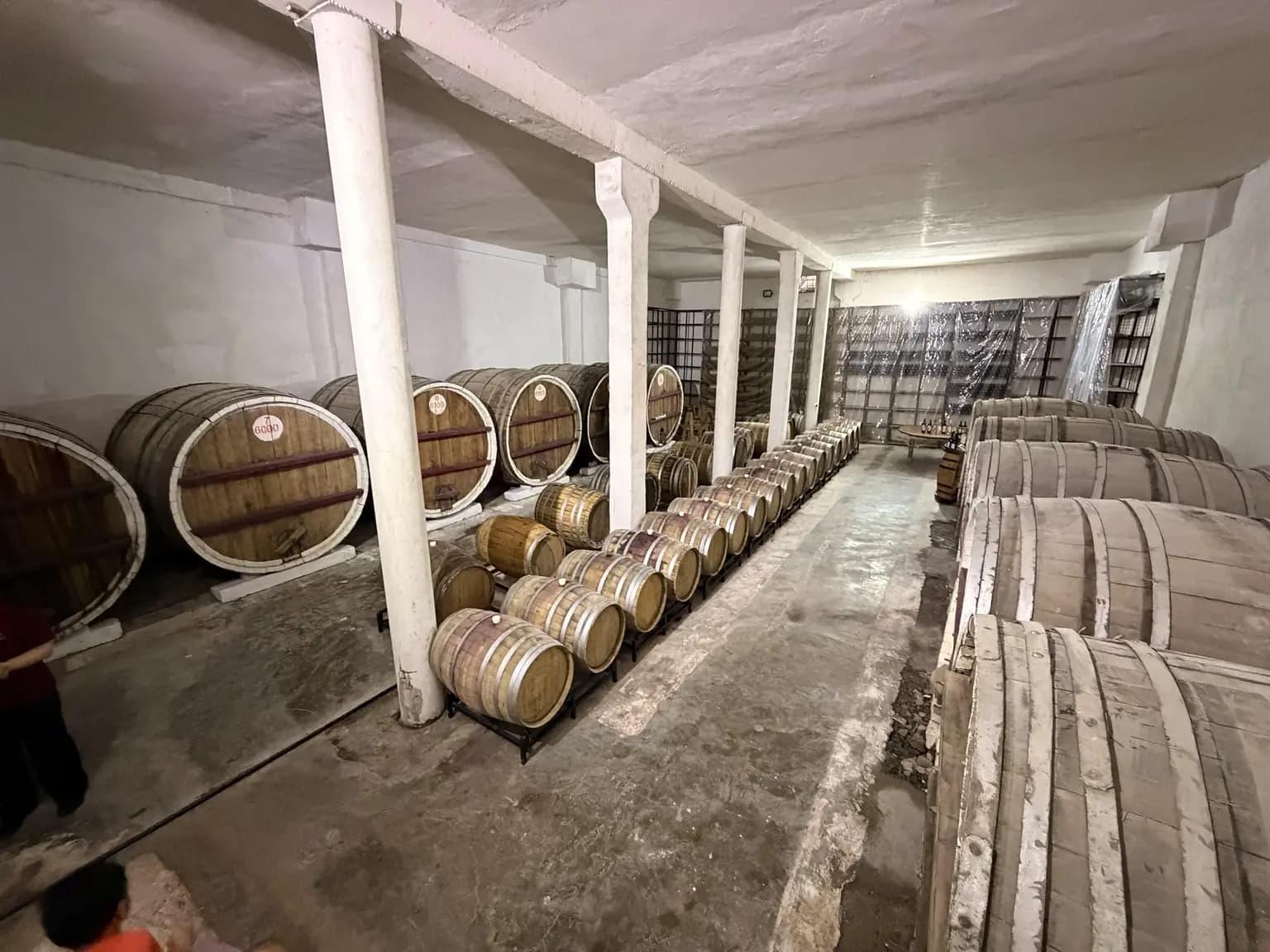
When you visit Vayk Winery, we show you the production areas and underground cellar before a tasting. When seasonal access allows, you can also walk among the Armenian and international grape varieties in our collection vineyard. Seeing the growing plants and the working cellar gives each glass a setting.
Back at Areni-1, the leather shoe keeps the past on a human scale. Its owner is unknown, but the shape of a foot remains. The clay wine installation preserves another kind of touch: a surface prepared so that juice would run where people wanted it to go.
Outside, water still moves through the Arpa Valley. On the slopes Ashot chose, irrigation reaches vines raised from carefully selected cuttings. The next harvest depends on tending them through another season. That is where our part in Vayots Dzor’s wine story continues, with the work that brings fruit from these hills to a shared table.
Plan a visit to Vayk Winery
Find us at Moz 1, Vayk 3801, Armenia. Use our map location to plan your drive from Yerevan or Areni.
Visits are by appointment. Book online at least one day ahead, or call +374 77 045530 for same-day availability. Ask about vineyard access for your visit date. Guests of all ages are welcome; wine tasting is for guests 18 and older. Please enjoy responsibly.
Sources and reporting
The family-history passages and quotations draw on an edited interview with Ashot Zakaryan conducted on October 18, 2026.
The Areni-1 shoe. Pinhasi and colleagues, 2010. First Direct Evidence of Chalcolithic Footwear from the Near Eastern Highlands. PLOS ONE 5(6), e10984.
The discovery account. Ron Pinhasi’s 2010 interview with PLOS explains Diana Zardaryan’s discovery and the initial medieval dating assumption.
Wine production at Areni-1. Barnard and colleagues, 2011. Chemical evidence for wine production around 4000 BCE in the Late Chalcolithic Near Eastern highlands. Journal of Archaeological Science 38, 977–984. The cave’s publication page provides the paper.
The excavators’ account. Areshian and colleagues, 2012. The Chalcolithic of the Near East and south-eastern Europe: discoveries and new perspectives from the cave complex Areni-1, Armenia. Antiquity 86, 115–130.
Areshian’s quotation. UCLA, January 11, 2011. The quotation in this article comes from the university’s original announcement of the Areni-1 findings.
Earlier wine evidence in Georgia. McGovern and colleagues, 2017. Early Neolithic wine of Georgia in the South Caucasus. PNAS 114, E10309–E10318.
Armenian grape diversity. Margaryan and colleagues, 2021. Genetic Diversity of Armenian Grapevine (Vitis vinifera L.) Germplasm: Molecular Characterization and Parentage Analysis. Biology 10, 1279.
Regional geology. Meliksetian and colleagues, 2021. Geological Hazards Focused Geopark Proposal, Armenia. EGU General Assembly conference abstract.
The Vayots Sar volcanic field. Smithsonian Institution, Global Volcanism Program. Vayots-Sar volcano profile, including the lava flow that dammed the Arpa River.
Noravank’s limestone setting. Armenia’s UNESCO Tentative List submission for Noravank and the upper Amaghou Valley, submitted in 1995. Tentative listing is not World Heritage inscription.
How limestone caves form. U.S. Geological Survey. How Caves Form. General background on limestone dissolution, rather than a site-specific history of Areni-1.
Grape styles and highland climate. Wine & Spirit Education Trust, February 9, 2026. A guide to Armenian wines, drawing on a webinar led by Arpine Manukyan DipWSET.
Continue reading
Explore the Armenian Wine Guide